KDP Interiors Passive Income Log Book: A Creator's Guide
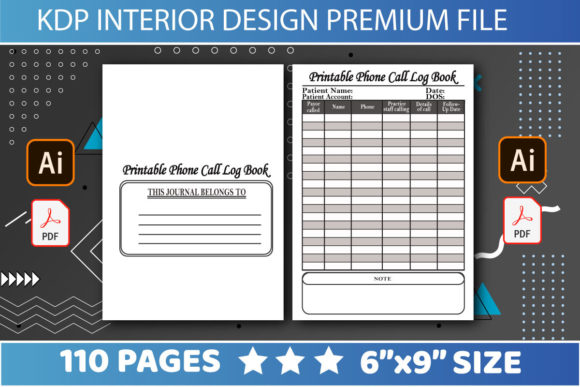
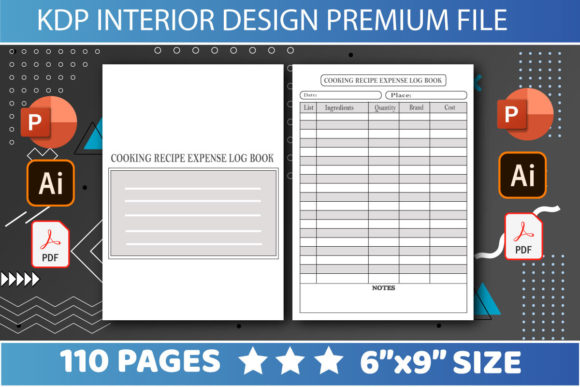
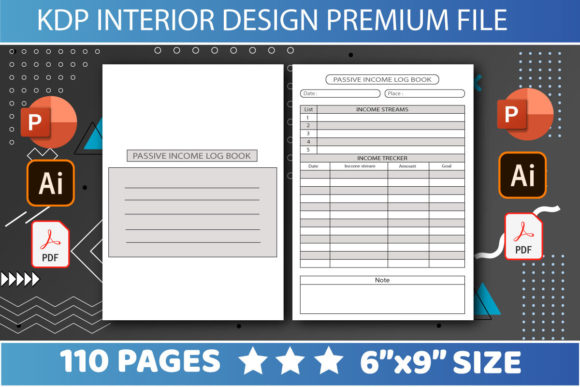
Building a sustainable passive income stream on Amazon KDP often hinges on the quality and usability of your low-content book interiors. The KDP Interiors Passive Income Log Book template is designed specifically to bridge the gap between technical specifications and market demand. This resource provides a foundational 6″ x 9″ layout that serves as a versatile canvas for creators, marketers, and entrepreneurs looking to establish or expand their publishing portfolio without getting bogged down in complex design software.
At its core, this log book interior solves the most common friction point for new publishers: formatting. With a precise 110-page count and a strict no-bleed setting, it eliminates the guesswork associated with margin errors and print rejection. However, its true value lies in its editability. By providing source files in PDF, AI, and PPT formats, this template empowers you to move beyond generic designs and create niche-specific tools that actually serve a user’s needs. Whether you are tracking fitness metrics, monitoring small business expenses, or logging creative project hours, this interior is the starting line for a product that offers genuine utility.
Technical Precision Meets Creative Flexibility
Understanding the technical constraints of KDP is essential for maintaining high-quality standards and avoiding account warnings. This log book template adheres to specific dimensions that optimize both printing costs and user experience. The 6″ x 9″ trim size is widely considered the industry standard for portable log books. It is large enough to provide adequate writing space yet compact enough to fit in a bag or desk drawer. This balance increases the perceived value of the book and encourages daily use, which leads to better reviews and organic ranking.
The inclusion of three distinct settings within the template allows for structural variety without breaking consistency. While the base file is set to "No Bleed," ensuring all content stays safely within the printable area, the editable nature of the AI and PPT files means you can adjust margins or add safe-zone elements as needed. The 110-page length is strategically chosen to keep the spine width sufficient for text placement while minimizing royalty-diminishing page counts. For creators using PowerPoint, this format is particularly advantageous. You do not need to master Adobe Illustrator to make meaningful changes; simple text edits, color adjustments, and logo placements can be executed directly in presentation software, making professional publishing accessible to non-designers.
Adapting the Interior for Specific Niches
A generic log book rarely generates significant passive income because it lacks targeted appeal. To maximize the potential of this KDP Interiors Passive Income Log Book, you must adapt the interior to solve specific problems for defined audiences. The editable files allow you to transform a basic tracking grid into a specialized tool.
- Health and Wellness Tracking: Modify the column headers to track water intake, macronutrients, sleep quality, or medication schedules. Adding motivational quotes or weekly reflection sections can differentiate your book from clinical medical logs.
- Small Business and Freelance Finance: Entrepreneurs often need simple mileage logs, expense trackers, or inventory sheets. Adjust the table widths to accommodate currency symbols and tax categories relevant to your target region.
- Hobby and Skill Development: Create logs for bird watching, knitting projects, wine tasting, or language learning. These niches are passionate and often underserved by mass-market stationery brands.
- Educational and Classroom Tools: Teachers and homeschoolers frequently require behavior charts, reading logs, or assignment trackers. Simplifying the visual design and increasing font size makes the interior appropriate for younger users or those with accessibility needs.
By customizing the prompt labels and table structures, you shift from selling a "notebook" to selling a "solution." This distinction is critical for conversion rates and long-term sales velocity.
Strategic Editing for Market Differentiation
Because this template is available to multiple users, originality becomes your primary competitive advantage. Simply uploading the file as-is is unlikely to yield results. Instead, approach the editing process as a branding exercise. Use the Adobe Illustrator (AI) file for deep structural changes, such as altering grid lines, adding custom icons, or integrating unique border patterns. If you lack vector design skills, the PowerPoint (PPT) file offers a middle ground where you can overlay brand colors, change typography, and insert proprietary content blocks.
Consider the visual hierarchy of the log pages. Are the input fields wide enough for handwriting? Is there sufficient white space to prevent the page from feeling cluttered? Small UX improvements, like rounding corners on tables or using lighter gray lines instead of harsh black, can significantly enhance the user experience. These subtle refinements signal professionalism and care, encouraging customers to choose your version over competitors who used the default settings. Furthermore, consistent styling across your entire catalog builds brand recognition, turning one-off buyers into repeat customers.
Best Practices for File Management and Publishing
Maintaining an organized workflow is just as important as the creative aspect of publishing. When working with multi-format files like PDF, AI, and PPT, establish a clear naming convention and version control system. Always save your master editable files separately from your final print-ready PDFs. This ensures you can return to make updates or create variations without recreating the layout from scratch.
- Verify Dimensions Before Upload: Even though the template is pre-sized, always double-check your document setup after editing. Ensure the artboard remains 6″ x 9″ and that margins respect the no-bleed safety zone.
- Flatten Your Final PDF: Before exporting for KDP, flatten your PDF to embed fonts and prevent layer shifting during the printing process. This also protects your intellectual property by making it harder for others to extract and reuse your custom elements.
- Test Print at Home: Digital screens can be deceiving. Print a single copy on your home printer at actual size to verify that writing spaces are functional and text is legible. What looks spacious on a monitor may feel cramped on paper.
- Document Your Changes: Keep a brief record of what modifications you made and why. This metadata helps when writing product descriptions or planning future expansions in the same niche.
Expanding Beyond the Single Product
Treat this log book interior as a modular component of a larger passive income strategy. Once you have validated a niche with this 110-page format, consider scaling up or down. The same design principles applied here can be adapted for larger 8.5″ x 11″ workbooks or smaller pocket-sized journals. Cross-promote related titles within your author central page or inside the book itself to build an ecosystem of products.
Additionally, leverage the versatility of the PPT and AI files to create complementary digital products. The same tracker layout used in your physical log book could be sold as a printable PDF on Etsy or as a digital planner insert. This multi-platform approach diversifies your revenue streams and reduces reliance on any single marketplace. Remember that the goal of using pre-made interiors is not to avoid work, but to accelerate the production phase so you can focus on research, marketing, and audience engagement.
Ultimately, the KDP Interiors Passive Income Log Book is a tool for efficiency. It removes technical barriers and provides a professional foundation, but your creativity and strategic thinking determine its success. By respecting the technical specs, investing time in thoughtful customization, and consistently prioritizing the end-user's experience, you transform a simple template into a valuable asset in your publishing business. Stay practical, stay organized, and let the utility of your product drive your passive income growth.