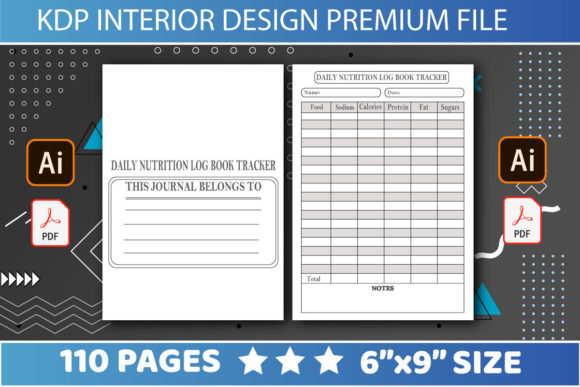
KDP Interiors Daily Nutrition Log Book: 6x9 Editable Template
Creating a successful low-content book on Amazon KDP often comes down to the quality and usability of the interior. The KDP Interiors Daily Nutrition Log Book is designed specifically for publishers who want to offer a practical, high-value tool without spending weeks on layout design. This 6″ x 9″ template provides a structured, professional foundation for health and wellness journals, featuring 110 pages of meticulously organized tracking space. Unlike generic templates that feel sterile or overly complex, this interior strikes a balance between comprehensive data entry and user-friendly simplicity, making it an ideal asset for entrepreneurs targeting the fitness, diet, and personal development niches.
The visual personality of this log book leans toward clean, modern utility. It avoids decorative clutter in favor of clear hierarchy and functional whitespace. For your audience of adults aged 20–50, readability is paramount; they are tracking macros, calories, water intake, and notes amidst busy schedules. The layout uses a sans serif font approach for headers and input fields to ensure legibility at small point sizes, while maintaining enough stylistic warmth to feel like a premium wellness product rather than a medical chart. This specific aesthetic aligns with current editorial design trends where minimalism meets functionality, helping your published book stand out against competitors using outdated or messy table structures.
Optimizing the 6x9 Format for Health Tracking
The choice of 6″ x 9″ dimensions is strategic for this type of content. In the realm of publishing and packaging design, this trim size offers the perfect portability-to-utility ratio. It fits comfortably in gym bags, purses, and backpacks, encouraging daily use which leads to better reviews and customer retention. When you utilize this KDP Interiors Daily Nutrition Log Book template, you are leveraging a format that maximizes page count efficiency. With 110 pages, users get over three months of tracking (assuming one page per day) or extended tracking if using a two-page spread system, providing substantial perceived value.
From a production standpoint, the "No Bleed" setting is a significant advantage for new and experienced publishers alike. Bleed errors are among the most common reasons for KDP rejection or printing delays. By designing within safe margins, this template ensures that your text and tables remain crisp and fully visible after trimming. This technical safety net allows you to focus on marketing and brand identity rather than troubleshooting print proofs. The PDF-ready structure means the file is optimized for KDP’s specific black-and-white ink density requirements, preventing issues with gray washout or lines that are too thin to print clearly.
Where This Interior Fits Your Publishing Strategy
Versatility is key when building a catalog of low-content books. While primarily a nutrition tracker, the underlying grid and list structures of this template can be adapted for various commercial projects. Marketers and bloggers in the health space can use this as a lead magnet or a physical companion to digital courses. Content creators focusing on keto, veganism, intermittent fasting, or general calorie counting will find the neutral layout adaptable to their specific branding needs. Because the files are editable in AI and PDF formats, you can easily swap out generic headers for niche-specific terminology, transforming a standard log into a specialized "Postpartum Recovery Tracker" or "Bodybuilding Macro Journal."
This adaptability extends to brand perception. Consistency in typography and layout builds trust. When a customer buys your book, the professional alignment and balanced spacing signal that you care about their experience. A poorly formatted interior damages credibility instantly. By starting with a professionally engineered KDP Interiors Daily Nutrition Log Book, you inherit a level of typographic discipline that influences how readers perceive your entire brand. This is particularly important for coaches and practitioners who self-publish resources; the book becomes an extension of their professional expertise, not just a merchandise add-on.
Editing and Customization Best Practices
Having access to editable AI and PDF files is only valuable if you know how to modify them effectively without breaking the layout. When customizing this interior, maintain the established visual hierarchy. If you change the font, stick to modern typography choices that prioritize function. A display font might look great on the cover, but inside a log book, it creates friction. Test any new typeface pairings by printing a sample page at actual size; what looks readable on a 27-inch monitor may be illegible in a 6x9 printed book. Ensure there is adequate padding inside table cells so users have physical space to write without cramping their handwriting.
- Maintain Safe Margins: Even though the template is no-bleed, keep critical text at least 0.375 inches from the gutter edge to prevent binding interference.
- Check Line Weights: If editing in Illustrator, ensure all stroke weights are above 0.5pt for consistent printing on KDP’s standard paper stock.
- Update Metadata Fields: Don’t forget to customize the copyright page, title page, and introduction section to match your specific niche and voice.
- Test Writeability: Print a test copy and actually use it for three days. Note where the spacing feels tight or where additional note sections would be helpful.
Commercial licensing is another critical consideration. Always verify the specific license terms included with your purchase of the KDP Interiors Daily Nutrition Log Book. Most reputable interior providers allow for unlimited commercial use in published books but prohibit reselling the raw template files or distributing them as free digital downloads. Understanding these boundaries protects your business and respects the original designer’s intellectual property. Treating this asset as a foundational component of your creative workflow, rather than a shortcut, ensures long-term sustainability in the competitive KDP marketplace.
Enhancing User Engagement Through Design
The ultimate goal of any nutrition log is adherence. If the book is frustrating to use, customers abandon it. The design of this interior supports habit formation through intuitive navigation. Clear section dividers, consistent placement of daily totals, and dedicated spaces for reflection reduce cognitive load. As a publisher, you can enhance this further by adding value-add pages such as conversion charts, pantry staples lists, or weekly review prompts. These additions transform a simple log into a comprehensive resource, increasing dwell time and satisfaction.
For marketers and social media managers, the clean aesthetic of this interior also serves as excellent promotional material. High-quality mockups showing the interior spreads perform well in ads because they demonstrate tangible utility. When showcasing the book, highlight the specific features that solve user pain points—like the ample writing space or the organized macro breakdown. Authenticity in presentation matters; avoid over-polished renders that hide the actual layout. Real photos of the printed book being used resonate more deeply with audiences looking for practical solutions. By combining a robust, editable template with thoughtful customization and honest marketing, you create a product that genuinely serves the health and wellness community while building a sustainable publishing business.