KDP Interiors Heart Lined Journal: Design & Format Guide
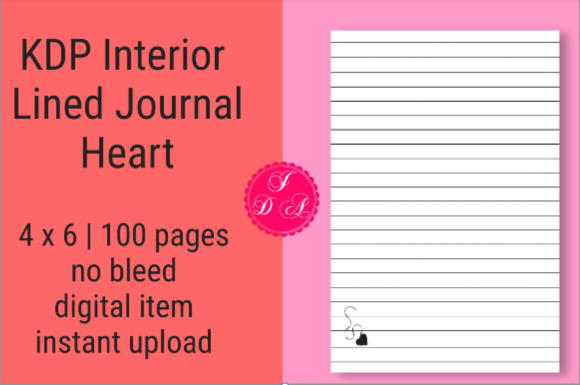
Creating a low-content book that resonates with readers requires more than just a compelling cover; the interior experience determines whether a customer becomes a repeat buyer or leaves a negative review. The KDP Interiors Heart Lined Journal serves as a specialized template designed to bridge the gap between functional note-taking and emotional expression. For publishers and creators targeting niches such as gratitude journaling, self-care, relationship tracking, or creative writing, this specific interior layout provides an immediate visual cue that distinguishes the product from generic lined notebooks. Understanding the technical specifications and practical applications of this 100-page, no-bleed PDF is essential for producing a high-quality book that meets Amazon’s printing standards while delivering genuine value to the end user.
Technical Precision and Print Quality Standards
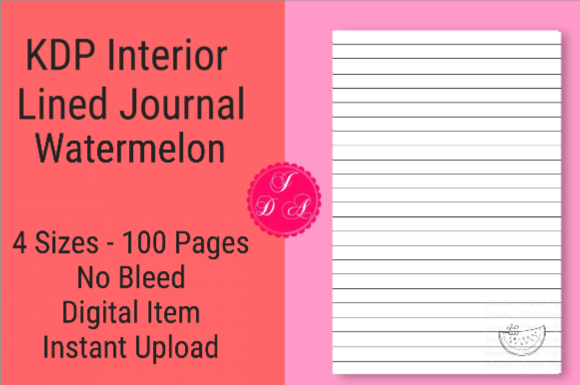
The foundation of any successful KDP publication lies in its technical adherence to printing guidelines. This heart-lined journal template is engineered at 300 DPI (dots per inch), which is the industry standard for crisp, professional-grade printing. Low-resolution files often result in pixelated lines or fuzzy graphics, which can make a journal feel cheap and discourage users from writing in it. By utilizing a 300 DPI source file, you ensure that the heart motifs and ruling lines remain sharp and distinct, even on standard white paper stock.
A critical feature of this template is the "No Bleed" setting. In KDP publishing, bleed refers to content that extends beyond the trim line of the page. While full-bleed interiors are popular for coloring books, they present significant risks for lined journals. If margins are not calculated perfectly, text or decorative elements can be trimmed off during production. The no-bleed format keeps all design elements safely within the printable area, eliminating the risk of misalignment. This safety margin is particularly important for the heart-lined aesthetic, where the decorative element usually sits near the outer edge or top of the page. Maintaining consistent margins ensures that every page looks uniform and professionally bound, reducing the likelihood of manufacturing defects and subsequent returns.
Strategic Size Selection for Specific Niches
Versatility in sizing allows publishers to target distinct user behaviors and market segments. The availability of this interior in four specific dimensions—4x6, 7x10, 8x10, and 8.5x11—is not arbitrary; each size serves a unique functional purpose that aligns with different consumer needs.
- 4x6 Portable Format: This compact size is ideal for "purse-sized" gratitude journals or travel diaries. Users in this demographic prioritize portability over extensive writing space. The heart-lined design in this format works exceptionally well for quick daily affirmations, pocket prayer journals, or on-the-go mindfulness trackers. Because the page real estate is limited, the heart motif acts as a concise focal point rather than overwhelming decoration.
- 7x10 Balanced Standard: Often considered the sweet spot for trade paperbacks, this size offers ample writing room without feeling cumbersome. It is frequently the best choice for general self-help journals, therapy workbooks, or teen diaries. The proportions allow for a comfortable line length that prevents hand fatigue while maintaining a cozy, personal feel enhanced by the heart graphics.
- 8x10 Visual Impact: Slightly wider than standard letter paper, this size provides a premium feel often associated with gift books or specialized planners. It offers horizontal breathing room that benefits users who write in larger handwriting or prefer to include sketches alongside their notes. This dimension is particularly effective for mother-daughter journals or wedding planning logs where the aesthetic presentation is as important as the utility.
- 8.5x11 Maximum Utility: The standard US letter size maximizes writing surface area. This format is best suited for educational settings, classroom reflection journals, or comprehensive health trackers where data entry and long-form writing are primary activities. In this size, the heart lining serves as a subtle thematic anchor without interfering with the functional need for extensive space.
Niche Alignment and Audience Relevance
The decision to use a heart-lined interior should always be driven by niche relevance rather than aesthetic preference alone. While standard horizontal lines are universally applicable, the addition of heart imagery signals a specific emotional context. Publishers must evaluate whether this visual language aligns with their target audience's expectations. For example, a grief journal, a new parent milestone tracker, or a Valentine’s Day themed notebook naturally benefits from this design. The visual reinforcement supports the user's emotional state and validates the journal's specific purpose.
However, caution is necessary when applying this template to broader categories. A business productivity planner or a technical field notebook would likely suffer from reduced credibility if paired with heart-lined paper. In those contexts, users expect neutrality and professionalism. The KDP Interiors Heart Lined Journal is most effective when the product positioning explicitly embraces themes of love, care, emotion, or personal connection. When the interior matches the exterior promise, customer satisfaction increases because the product delivers a cohesive experience. Misalignment between cover branding and interior design is a common cause of negative reviews in the low-content space; ensuring the heart motif supports your specific sub-niche mitigates this risk.
Optimizing the 100-Page Count for User Engagement
The 100-page specification represents a strategic balance between perceived value and physical usability. In the journaling market, books that are too thick can intimidate users or become unwieldy to carry, while books that are too thin may feel insubstantial. One hundred pages typically translates to roughly three months of daily entries or six months of bi-daily reflection, depending on usage patterns. This duration is psychologically significant; it is long enough to establish a habit but short enough to feel achievable.
For publishers, this page count also optimizes printing costs relative to royalty potential. It avoids the higher price brackets associated with thicker volumes while providing sufficient content to justify a competitive retail price. When using the heart-lined template, consider how the 100-page structure supports the user journey. You might utilize the first few pages for prompts or dedication spaces before transitioning into the main lined section. Although this listing is for the interior only, understanding that 100 pages is the fixed constraint helps in planning complementary front matter or back matter if you choose to modify the file later. The consistency of 100 pages across all four sizes also simplifies inventory management and marketing messaging, allowing you to create series or bundles with uniform thickness.
Implementation Best Practices and Limitations
When integrating this PDF template into your publishing workflow, several practical considerations ensure a smooth launch. First, verify that your cover design accounts for the exact spine width calculated for 100 pages at the chosen trim size. Spine width varies based on paper type (white vs. cream) and page count; using a calculator specifically calibrated for KDP’s current specifications prevents cover misalignment. Since this is a no-bleed interior, your cover must also respect safe zones to prevent artwork from wrapping onto the interior pages unintentionally.
It is equally important to recognize what this template does not include. As an interior-only asset, it lacks customizable fields, dated sections, or proprietary prompts. This neutrality is a feature, not a bug, as it grants you complete freedom to brand the journal as your own. However, it also means you cannot rely on the template to provide structural guidance to the user. If your niche requires specific frameworks, such as CBT exercises or structured gratitude lists, you will need to add those elements separately or select a different template. The heart-lined journal excels as a free-writing vessel supported by thematic aesthetics, not as a rigid instructional tool.
Finally, always order a proof copy before launching. Screen resolution differs significantly from printed output, especially regarding line weight and contrast. What appears as a delicate heart on a monitor may print too dark or too faint depending on the printer’s calibration. Physical verification confirms that the 300 DPI quality translates effectively to paper and that the no-bleed margins provide adequate white space for comfortable writing. By treating the KDP Interiors Heart Lined Journal as a professional component of a broader product strategy rather than a standalone shortcut, publishers can create meaningful, high-quality resources that serve specific communities effectively.