KDP Interiors Sales Call Log Book: Optimizing Low-Content Publishing for Modern Professionals
In the evolving landscape of self-publishing and digital product creation, specificity is the primary driver of success. The era of uploading generic notebooks and hoping for passive income has largely passed. Today’s market demands functional tools tailored to specific professional workflows. Among these niche assets, the KDP Interiors Sales Call Log Book stands out as a prime example of utility-driven design. This resource is not merely a collection of blank lines; it is a structured system designed to capture critical business data in a portable format. For creators targeting sales professionals, real estate agents, insurance brokers, and independent contractors, understanding the technical and practical nuances of this interior is essential for building a sustainable publishing portfolio.
The relevance of a dedicated sales call log extends beyond simple record-keeping. In an age dominated by Customer Relationship Management (CRM) software and mobile apps, there is a counter-trend toward analog documentation. Professionals are increasingly seeking tactile methods to reduce screen fatigue and improve focus during client interactions. A well-designed 6″ x 9″ log book serves as a distraction-free zone where active listening takes precedence over data entry. For KDP publishers, recognizing this behavioral shift allows for the creation of products that solve genuine problems rather than adding to digital noise.
Technical Specifications and Print Optimization
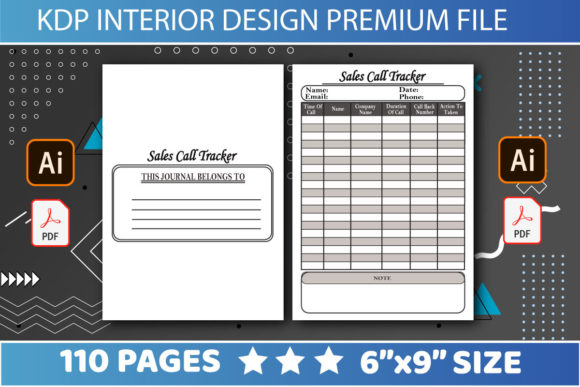
Success on Amazon KDP relies heavily on adhering to precise manufacturing standards while maximizing user experience. The standard dimension for this type of functional journal is 6″ x 9″ inches. This trim size is the industry sweet spot for portability. It fits comfortably in a briefcase, glove compartment, or large pocket, making it accessible for field sales representatives who cannot carry bulky binders. Unlike larger formats that feel cumbersome during a quick site visit, the 6x9 form factor encourages consistent usage.
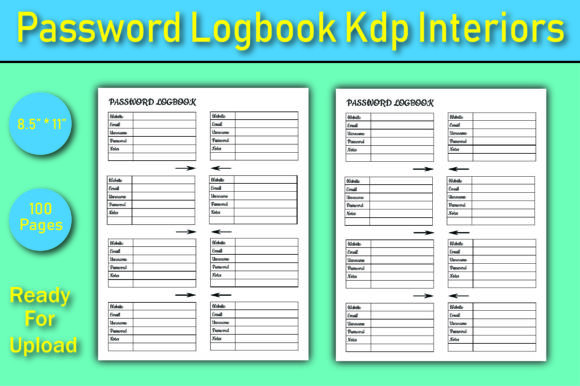
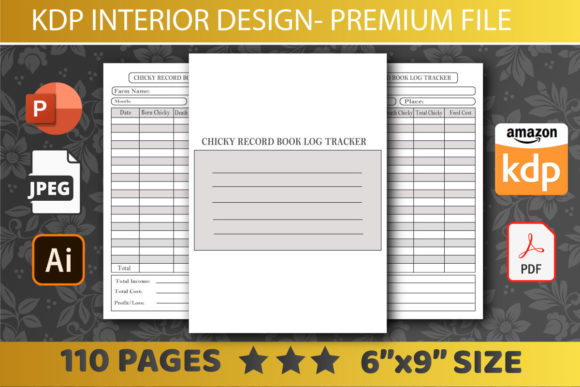
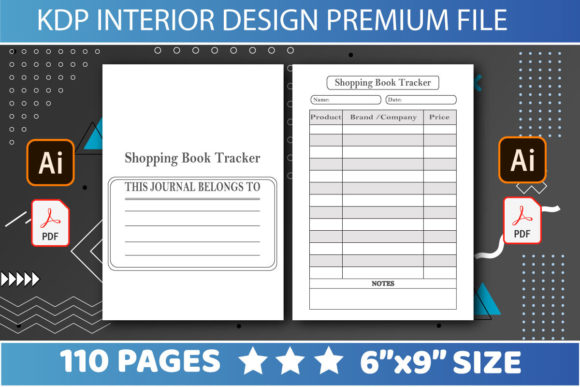
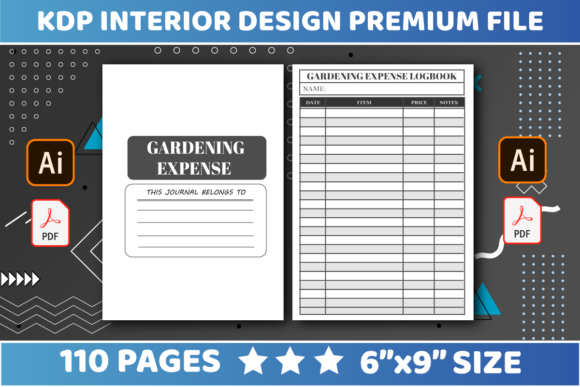
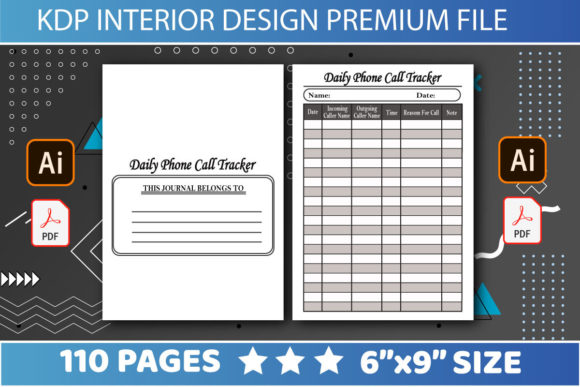
The interior structure typically comprises 110 pages, providing enough volume for several months of daily tracking without becoming unwieldy. This page count also aligns efficiently with KDP’s printing cost tiers, allowing for competitive pricing while maintaining healthy royalty margins. Crucially, the file setting should be configured to No Bleed. Sales logs rely on clean borders and defined writing spaces. Extending graphics to the edge of the page introduces unnecessary risk during the trimming process and can encroach upon the usable writing area. A no-bleed setup ensures that headers, footers, and column dividers remain crisp and predictable, which is vital for a product intended for professional use.
The Importance of Editable Source Files
One of the most significant advantages of modern KDP interiors is the availability of editable source formats. High-quality resources now include PDF, AI (Adobe Illustrator), and PPT (PowerPoint) files. This multi-format approach democratizes customization. While PDFs serve as ready-to-upload finals for those seeking speed, the AI and PPT files empower creators to differentiate their products in a saturated marketplace.
Being able to easily edit these files transforms a generic template into a branded asset. A publisher targeting real estate agents might modify the columns to include "Property Address" and "Listing Price," whereas a version for insurance adjusters might require "Claim Number" and "Policy Type." PowerPoint files, in particular, lower the barrier to entry for creators who lack advanced graphic design skills but understand layout principles. This flexibility ensures that the KDP Interiors Sales Call Log Book remains a versatile foundation rather than a static commodity.
Aligning Design with Professional Workflows
To create a best-selling log book, one must understand the actual workflow of a sales professional. The interior layout must facilitate rapid data capture. Columns should be wide enough for handwriting but structured enough to allow for later digitization if necessary. Common fields include Date, Time, Client Name, Contact Method, Outcome, and Follow-Up Action. However, the evolution of this niche suggests adding value through thoughtful extras. Sections for quarterly goals, conversion rate trackers, or expense summaries elevate the book from a simple pad to a comprehensive business planner.
Current market preferences indicate a strong demand for minimalism. Overly decorative interiors often fail because they reduce functional space. Professionals prefer clean typography, subtle grid lines, and ample white space. The aesthetic should communicate efficiency and professionalism. When utilizing editable AI or PPT files, resist the urge to overcrowd the pages. The value proposition lies in the clarity of the layout, not the complexity of the design elements.
Adapting to Hybrid Work Environments
The definition of "sales calls" has expanded significantly. Modern professionals conduct business via Zoom, phone, email, LinkedIn DMs, and in-person meetings. A relevant KDP interior must accommodate this hybrid reality. Older templates that assume face-to-face interaction may feel obsolete. Updating the "Contact Method" field to include digital options or adding a section for "Virtual Meeting Link/Notes" demonstrates an understanding of contemporary business practices.
This adaptation speaks directly to the changing habits of the target audience. Freelancers and solopreneurs often juggle multiple communication channels simultaneously. A log book that acknowledges this fragmentation helps users consolidate their scattered interactions into a single, searchable physical record. By reflecting these realities in your design, you signal to potential buyers that your product was created with their current lifestyle in mind, not based on outdated assumptions.
Strategic Customization for Niche Dominance
Because the base files are easily editable, creators should adopt a strategy of micro-niching. Instead of releasing one generic "Sales Call Log," consider developing variations for specific industries using the same core 110-page structure. The ability to modify PDF, AI, and PPT files makes this scalable. Each variation can target distinct long-tail keywords and address unique pain points.
- Real Estate Agents: Focus on property details, showing feedback, and open house attendance.
- Insurance Brokers: Prioritize policy numbers, coverage types, and renewal dates.
- B2B Software Sales: Include fields for decision-makers, budget cycles, and demo stages.
- Network Marketers: Emphasize recruitment tracking, team mentorship notes, and personal development goals.
- Freelance Consultants: Track billable hours, project milestones, and invoice status alongside call details.
This level of specificity improves discoverability and conversion rates. Buyers are more likely to purchase a tool that explicitly mentions their profession than a general alternative. Furthermore, creating a series establishes authority within a niche, encouraging repeat purchases and cross-promotion opportunities.
Quality Assurance and User Experience
Even with perfect dimensions and editable files, execution matters. Before publishing any variation of the KDP Interiors Sales Call Log Book, rigorous testing is required. Print a proof copy to verify line spacing and margin safety. Lines that look adequate on screen may be too narrow for comfortable handwriting in print. Ensure that the gutter margin accounts for the binding so that writing near the spine does not become difficult. With 110 pages, the inner margin needs to be generous enough to prevent text from disappearing into the crease.
User expectations for low-content books have risen. Customers read reviews closely and will penalize books with formatting errors, blurry text, or poor paper utilization. Leveraging the high-resolution source files provided in AI or PPT formats ensures that vectors remain sharp at any scale. Avoid stretching raster images or using low-DPI assets. Professionalism in the digital file translates directly to perceived value in the physical product.
The Future of Analog Tracking in Digital Sales
While technology continues to advance, the cognitive benefits of handwriting remain scientifically supported. Writing by hand enhances memory retention and conceptual understanding better than typing. For sales professionals, this means that logging calls in a physical book can actually improve relationship management and deal recall. Publishers who frame their products around these cognitive benefits connect with buyers on a deeper level.
Moreover, data privacy concerns are driving some professionals back to paper. Storing sensitive client information locally in a notebook eliminates cybersecurity risks associated with cloud-based CRMs. Highlighting this security aspect in your product description can appeal to privacy-conscious users in regulated industries like healthcare or finance. The KDP Interiors Sales Call Log Book thus becomes not just a productivity tool, but a compliance-friendly alternative.
Ultimately, the success of this KDP asset lies in balancing technical precision with empathetic design. By utilizing the 6″ x 9″ no-bleed format, leveraging editable PDF/AI/PPT files, and staying attuned to the shifting workflows of modern professionals, creators can build products that offer genuine utility. The goal is to move beyond saturation by offering specialized solutions that respect the user's time, profession, and need for tangible organization. In doing so, publishers contribute to a healthier ecosystem where quality and relevance drive sales, ensuring longevity in the competitive world of low-content publishing.