Optimizing Your Publishing Workflow with the KDP Interiors Chicky Record Log Book Template
Creating a successful low-content book on Amazon requires more than just a catchy cover; the interior experience determines whether a customer leaves a five-star review or returns the product. For publishers targeting poultry enthusiasts, backyard farmers, and homesteaders, precision in layout is non-negotiable. The KDP Interiors Chicky Record Log Book serves as a specialized foundation for this niche, offering a pre-structured solution that balances aesthetic appeal with functional data tracking. Understanding the technical specifications and practical applications of this 6″ x 9″ template is essential for producing a high-quality logbook that meets both KDP guidelines and user expectations.
Technical Specifications and Print Safety
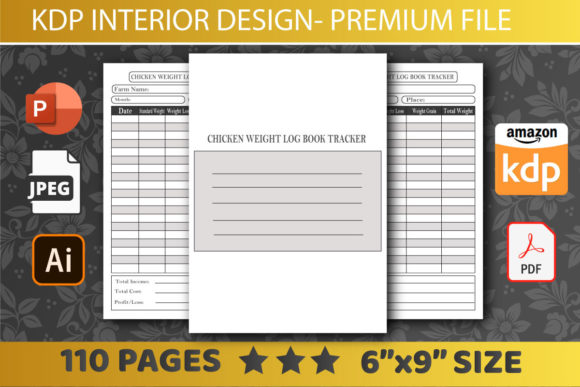
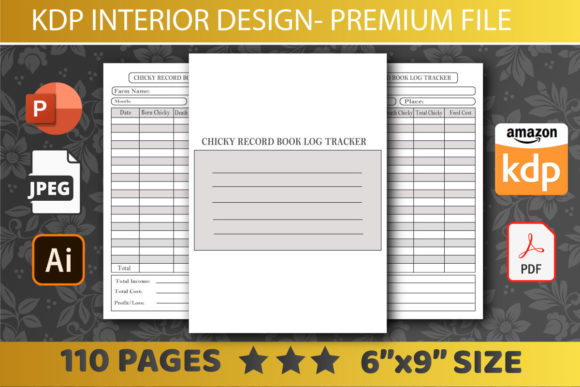
The physical dimensions of a logbook dictate its usability in real-world scenarios. This template adheres to a standard 6″ x 9″ trim size, which is widely considered the sweet spot for field journals. It is large enough to accommodate detailed handwriting and tabular data yet compact enough to fit into a barn coat pocket or a gear bag. When utilizing the KDP Interiors Chicky Record Log Book, publishers must pay close attention to the 110-page count. This specific length provides substantial value without pushing the spine width into a range that increases printing costs disproportionately. For a record-keeping book, 110 pages typically translates to several months of daily tracking or a full year of weekly summaries, depending on how the user fills out the entries.
A critical aspect of this template is the "No Bleed" setting. In KDP publishing, bleed refers to content that extends beyond the trim line. While full-color children's books often require bleed, functional logbooks usually benefit from a no-bleed setup to ensure all text and table lines remain safely within the margins. This specific design choice eliminates the risk of crucial recording fields being trimmed off during the manufacturing process. It also simplifies the upload process, as KDP’s automated review system is less likely to flag margin errors when the interior is designed with a safe zone buffer. Publishers should always verify that their PDF export maintains these safety margins before final submission.
The Importance of Multi-Format Editability
One of the most significant advantages of this particular interior package is the inclusion of multiple source file formats: PDF, AI (Adobe Illustrator), and PPT (PowerPoint). This versatility addresses the varying skill levels and software access of different publishers. Relying solely on a flattened PDF limits your ability to customize the product, which can lead to market saturation with identical interiors. By providing editable AI and PPT files, the KDP Interiors Chicky Record Log Book empowers creators to differentiate their offerings.
- Adobe Illustrator (AI): Ideal for professional designers who need vector-level control over table lines, fonts, and graphics. This format allows for precise adjustments to stroke weights and color profiles, ensuring the crispest possible print quality.
- PowerPoint (PPT): A game-changer for beginners or those without expensive design software. PowerPoint allows users to move text boxes, resize tables, and change headers using familiar tools. This lowers the barrier to entry for creating customized poultry logs.
- PDF: Serves as the master reference and the final output format. Even if you edit in AI or PPT, the final deliverable to KDP must be a high-resolution PDF to preserve formatting integrity.
Functional Design for Poultry Record Keeping
The efficacy of a logbook lies in its ability to capture relevant data without overwhelming the user. Generic notebooks fail in this regard because they lack specific prompts. The KDP Interiors Chicky Record Log Book is engineered with the specific metrics of chicken keeping in mind. Effective poultry management involves tracking variables that directly impact flock health and productivity. When customizing this template, consider how the layout facilitates the recording of egg production, feed consumption, health treatments, and environmental observations.
For example, a well-designed two-page spread might dedicate the left page to daily egg counts and feed intake, while the right page offers space for notes on hen behavior, weather conditions, or veterinary interventions. This separation of quantitative and qualitative data makes the logbook a genuine management tool rather than just a diary. Users appreciate layouts that reduce friction; if it takes more than thirty seconds to record a day's worth of data, the logbook will likely be abandoned. The pre-formatted tables in this template provide visual cues that speed up the entry process, allowing farmers to spend less time writing and more time tending to their animals.
Customization Strategies for Market Differentiation
Because the base files are easily editable, publishers can create distinct variations from a single source asset. Customization is not merely about changing the title; it involves adapting the interior to specific sub-niches within the poultry community. Consider creating a version specifically for show bird breeders, where tracking lineage and feather molting cycles takes precedence over egg production. Alternatively, a version designed for commercial micro-farms might emphasize cost-per-egg calculations and inventory management.
Editing the KDP Interiors Chicky Record Log Book in PowerPoint or Illustrator also allows for branding consistency. You can integrate your logo, adjust the font hierarchy to match your cover design, or add instructional pages at the beginning of the book. Adding a "How to Use This Log" section or a reference chart for common chicken ailments adds tangible value that justifies a higher price point. These small modifications transform a generic template into a proprietary product that builds brand loyalty and encourages repeat purchases.
Workflow Integration and File Management
Incorporating this template into a modern publishing workflow requires disciplined file management. Since you have access to AI, PPT, and PDF formats, establishing a clear naming convention and version control system is vital. Always keep an untouched master copy of the original files. Create separate working copies for each variation you intend to publish. This prevents accidental overwrites and ensures you can always revert to the clean template if a customization experiment fails.
When exporting your final PDF for KDP, pay attention to resolution and color space. Although the interior is likely black and white, ensuring that all elements are set to grayscale or true black (K=100) prevents unnecessary color printing charges and ensures sharp text reproduction. The 6″ x 9″ dimensions must be exact; even a fraction of an inch discrepancy can cause rejection during the upload phase. Utilizing the provided PDF as a proofing layer over your edited AI or PPT file can help catch alignment issues before they become costly mistakes.
User Experience and Practical Application
Ultimately, the success of the KDP Interiors Chicky Record Log Book depends on how well it serves the end-user in a dirty, busy environment. Poultry keeping is hands-on work, often performed in low light or inclement weather. The layout should feature adequate spacing between lines and sufficiently large input boxes to accommodate gloved hands or quick scribbles. High contrast is essential; faint gray lines may look elegant on screen but can disappear entirely when printed on standard KDP paper or viewed in dim coop lighting.
Publishers should also consider the binding implications of the 110-page count. At this thickness, the book remains flexible enough to lay relatively flat when open, which is crucial for users who need to write while standing or balancing the book on a knee. If the page count were significantly higher, the gutter margin would need to increase to prevent text from falling into the binding crease. The current specification strikes an optimal balance between capacity and physical ergonomics, making it a reliable tool for daily agricultural routines.
Strategic Value for Low-Content Publishers
Choosing a specialized template like this over a generic lined journal demonstrates a commitment to quality that algorithms and customers alike reward. Search intent for poultry logbooks is highly specific; users are looking for a tool that solves a problem, not just blank paper. By leveraging the editable nature of the KDP Interiors Chicky Record Log Book, you can rapidly test different angles—such as organic certification tracking, breeding pair analysis, or 4-H project logging—without investing hundreds of hours in ground-up design.
The availability of multiple file formats future-proofs your investment. As design trends evolve or as you upgrade your software suite, having access to the native AI and PPT files ensures your assets remain usable. This flexibility supports a sustainable publishing business model where products can be updated, refreshed, and expanded upon over time. Whether you are a seasoned self-publisher streamlining your production line or a newcomer looking for a professional starting point, this template provides the structural integrity and creative freedom necessary to succeed in the competitive agricultural niche.