Evaluating the KDP Interiors Coffee Testing Logbook for Self-Publishing
Selecting the right interior template is a critical step in the low-content book publishing process. For creators focusing on niche journals, the KDP Interiors Coffee Testing Logbook represents a specific functional tool designed for coffee enthusiasts, roasters, and sensory evaluators. This resource provides a structured framework for documenting tasting notes, brewing parameters, and sensory analysis. Understanding the technical specifications and practical applications of this logbook is essential for determining whether it aligns with your publishing goals or personal tracking needs.
Understanding the Product Specifications
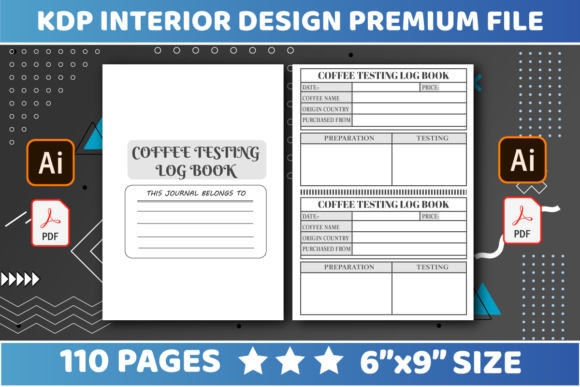
The KDP Interiors Coffee Testing Logbook is defined by precise technical parameters that influence both the user experience and the printing requirements on Amazon KDP. The format adheres to a 6″ x 9″ trim size, which is widely considered the industry standard for portable journals and field guides. This dimension offers a balance between writing space and portability, making it suitable for use in kitchen environments, coffee shops, or cupping labs without being cumbersome.
The interior consists of 110 pages, providing substantial capacity for long-term tracking. Crucially, the layout features two distinct settings per page spread. This dual-entry design maximizes paper efficiency, allowing users to record multiple tasting sessions or compare two different brews side-by-side within a single view. The file is configured with no bleed, meaning all content elements are contained safely within the margins. This specification simplifies the upload process and reduces the risk of formatting errors during the KDP proofing stage.
Distribution formats include PDF, AI (Adobe Illustrator), and editable source files. The inclusion of vector-based AI files alongside standard PDFs is a significant differentiator. While the PDF serves as a ready-to-upload solution, the AI files grant full creative control. Users can modify fonts, adjust line weights, add branding, or restructure the data fields to suit specific cupping protocols. This editability transforms the product from a static template into a customizable foundation for unique intellectual property.
Primary Use Cases and Target Audience
This logbook serves distinct user segments, each with different evaluation criteria. Professional roasters and Q-graders often require standardized forms that align with Specialty Coffee Association (SCA) protocols. For these users, the value lies in the ability to edit the AI files to match official scoring sheets while maintaining a consistent book format for archival purposes.
Home baristas and hobbyists represent another key demographic. For this group, the pre-designed structure offers an immediate entry point into sensory training without requiring graphic design skills. The two-setting layout supports comparative tasting, a fundamental practice for developing palate sensitivity. By documenting variables such as grind size, water temperature, and extraction time next to flavor descriptors, users can objectively track how adjustments impact cup quality.
Publishers creating commercial journals must evaluate the template's market viability. The coffee niche is competitive, and success often depends on differentiation. The editable nature of this logbook allows publishers to create variations—such as espresso-specific logs, cold brew trackers, or home roasting diaries—from a single master file. This versatility supports portfolio expansion without necessitating new designs from scratch.
Benefits and Strategic Advantages
The primary advantage of the KDP Interiors Coffee Testing Logbook is workflow efficiency. Designing a functional cupping form requires understanding both coffee chemistry and information architecture. A professionally structured template eliminates the trial-and-error phase of layout design, ensuring that data fields are logically organized and visually balanced.
Technical compliance is another significant benefit. KDP’s printing specifications regarding margins and safe zones can be complex for new publishers. A pre-validated no-bleed template mitigates the risk of rejection or poor print quality. The 6″ x 9″ size also optimizes royalty potential; it is large enough to justify a higher price point than smaller formats while keeping printing costs lower than larger workbooks.
Customization capability extends the product's lifespan. Market trends in coffee evolve rapidly; new brewing devices and processing methods emerge regularly. Static templates may become obsolete, but editable files allow publishers to update terminology or add new tracking metrics in response to industry shifts. This adaptability protects the long-term relevance of the published asset.
Tradeoffs and Limitations
Despite its utility, this logbook has limitations that require careful consideration. The no-bleed constraint, while safer for printing, restricts aesthetic possibilities. Designs cannot extend to the edge of the page, resulting in mandatory white borders. For brands seeking a premium, immersive visual experience, this limitation may feel restrictive compared to full-bleed alternatives.
The two-setting layout assumes a specific usage pattern. Users who prefer extensive narrative notes or detailed sketching may find the divided space constraining. Conversely, those recording minimal data might perceive the layout as wasteful. It is vital to assess whether the fixed structure matches the intended depth of documentation before committing to this format.
Editability requires software proficiency. While AI files offer maximum flexibility, they demand Adobe Illustrator or compatible vector software. Publishers lacking these tools or skills will be limited to the PDF version, negating the customization advantage. Additionally, modifying technical elements like margin guides or binding offsets requires precision; improper editing can reintroduce the very formatting issues the template was designed to prevent.
Evaluating Fit Against Alternatives
Determining whether this logbook is appropriate involves comparing it against available alternatives. Generic lined journals or dot-grid notebooks offer maximum freedom but lack guided structure. They are suitable for unstructured reflection but inefficient for systematic data collection. If the goal is rigorous sensory analysis or parameter tracking, the specialized fields in the KDP Interiors Coffee Testing Logbook provide superior utility.
Digital tracking apps present another alternative. Applications offer searchability, data visualization, and cloud sync capabilities that physical books cannot match. However, many coffee professionals prefer analog recording during active tasting to avoid screen distraction and device contamination in wet environments. Physical logbooks also serve as tangible artifacts of learning and professional development. The choice between digital and analog should be based on workflow context rather than feature lists alone.
Custom-designed interiors offer complete control but require significant time investment and design expertise. For publishers testing a new niche or individuals needing immediate functionality, the template approach reduces barriers to entry. Custom design becomes justifiable only when existing templates fundamentally fail to accommodate unique requirements or when brand differentiation demands proprietary layouts.
Practical Decision-Making Framework
When evaluating this resource, consider three core questions. First, does the 6″ x 9″ format support the intended usage environment? Portability matters for travel or cafe use, while desk-bound reference might benefit from larger dimensions. Second, does the two-setting density match the expected volume of notes per session? Review sample pages critically to verify adequate writing space. Third, do you possess the tools and skills to leverage the editable files effectively? If not, factor in the cost of outsourcing modifications or accept the PDF’s limitations.
For publishers, conduct competitive analysis before purchasing. Examine top-selling coffee journals in the category to identify gaps in current offerings. If existing products use similar layouts, determine how the editable files could enable meaningful differentiation. Unique value propositions might include specialized sections for fermentation tracking, equipment maintenance logs, or regional processing method comparisons.
Ultimately, the KDP Interiors Coffee Testing Logbook functions best as a strategic starting point rather than a final destination. Its value derives from combining technical compliance with domain-specific structure, accelerated through editable formats. Success depends on aligning these capabilities with clear objectives, whether for personal skill development or commercial publishing. Careful evaluation of specifications against actual needs ensures the investment yields functional results rather than unused digital assets.