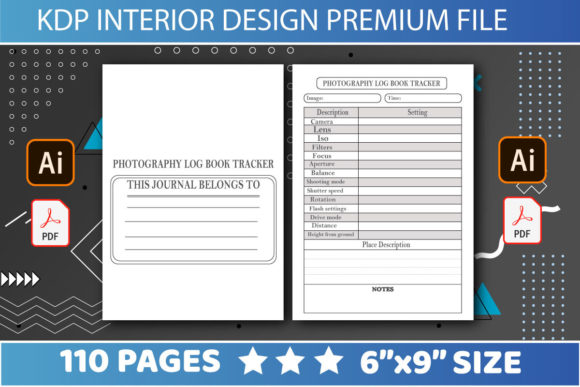
Evaluating the KDP Interiors Photography Log Book for Self-Publishing
For self-publishers and digital product creators, sourcing high-quality, niche-specific interiors is often the bottleneck in the production workflow. The KDP Interiors Photography Log Book represents a targeted solution for those looking to publish functional journals for photographers without investing hundreds of hours in custom layout design. This resource is specifically engineered for Amazon Kindle Direct Publishing (KDP) standards, addressing the technical and aesthetic requirements of the photography niche. Rather than being a generic notebook template, it serves as a specialized tool for documenting camera settings, lighting conditions, and location data, making it a viable asset for publishers targeting serious hobbyists and professional shooters.
Technical Specifications and Print Readiness
The foundation of any successful KDP interior is adherence to platform specifications, and this log book is configured to minimize pre-publishing friction. The dimensions are set to the industry-standard 6″ x 9″ inches, which strikes an optimal balance between portability and writing space for field use. This trim size is widely accepted by readers as the standard for handheld reference guides and logs.
A critical specification for this asset is the "No Bleed" setting. For low-content books like log books, maintaining a no-bleed format significantly reduces printing complexity and potential errors during the proofing stage. It ensures that all content remains safely within the margins, eliminating the risk of text or lines being trimmed off during the binding process. The file structure includes 110 pages, providing substantial value to the end-user while keeping the spine width sufficient for legible text on the bookshelf. This page count is generally considered the sweet spot for perceived value versus printing costs in the journal category.
File Formats and Editing Capabilities
Versatility in file delivery is essential for modern publishing workflows. This package provides both PDF and AI (Adobe Illustrator) files, catering to different levels of technical proficiency and customization needs.
- PDF Files: These are ready-to-upload documents suitable for publishers who want to validate the interior and proceed directly to publication. They serve as the final output standard, ensuring that fonts, lines, and spacing remain consistent across all devices and print facilities.
- AI Files: The inclusion of source files is where the long-term value lies. Adobe Illustrator files allow for vector-based editing, meaning you can resize elements, adjust line weights, or modify text fields without pixelation. This is crucial for branding; you can add your own logo, change the header font to match a series, or tweak the input fields based on specific sub-niche feedback.
The ability to easily edit these files transforms a static product into a flexible template. For entrepreneurs managing multiple pen names or brands, this editability allows for rapid differentiation. You can create distinct variations for landscape photographers, studio portrait artists, or videographers simply by adjusting the labels and layout in the source file.
Functional Design and User Experience
The effectiveness of a photography log book depends entirely on its utility in the field. Photographers do not need blank lined paper; they need structured data entry points that correlate with their workflow. This interior typically includes dedicated sections for three distinct settings or shooting scenarios per spread, optimizing the 6x9 real estate.
Practical usability involves more than just placing boxes on a page. A well-designed log book anticipates the cognitive load of a photographer working in dynamic environments. Key fields usually include aperture, shutter speed, ISO, focal length, white balance, and lighting setup. However, the superior versions of this interior also account for environmental variables such as weather conditions, time of day, and subject notes. When evaluating this specific KDP Interior Photography Log Book, assess whether the input fields are spacious enough for handwritten notes. Cramped layouts lead to poor user reviews, as photographers often write quickly while standing or moving.
The consistency of the layout across all 110 pages establishes a rhythm for the user. Repetitive structure reduces the mental effort required to document shots, allowing the photographer to focus on the creative process rather than navigating the book. This reliability is a key selling point when marketing the physical product to professionals who demand efficiency.
Audience Fit and Market Application
Understanding who actually buys and uses this type of log book is vital for effective marketing and keyword selection. The audience for this interior extends beyond general photography enthusiasts.
- Professional Freelancers: Wedding and event photographers often require physical backups of digital metadata for client deliverables and insurance purposes. A structured log provides a tangible record of technical decisions.
- Educators and Students: Photography instructors frequently assign log books to help students understand the relationship between manual settings and visual outcomes. This interior serves as an excellent teaching aid for exposure triangles and lighting ratios.
- Film and Analog Shooters: With the resurgence of analog photography, film users have a heightened need for logging because they lack instant digital EXIF data. This demographic values precision and archival quality in their documentation tools.
- Nature and Wildlife Photographers: These users operate in environments where batteries fail and screens are hard to read. A durable, simple log book is a reliable companion in harsh conditions.
When utilizing this KDP Interiors Photography Log Book, consider tailoring your cover design and book description to one of these specific segments rather than targeting "photographers" broadly. Specificity drives conversion in saturated markets.
Strategic Considerations for Publishers
While this interior offers significant advantages, realistic evaluation requires acknowledging limitations and best practices. The "easily editable" claim assumes familiarity with vector graphics software. If you lack access to Adobe Illustrator or compatible alternatives like Affinity Designer, your ability to customize the AI files will be limited. In such cases, you must rely solely on the PDF, which restricts your ability to differentiate the product from others using the same base template.
Furthermore, quality assurance is non-negotiable. Before publishing, always order a physical proof. Screen resolution does not accurately represent print contrast, especially for grayscale interiors. Lines that appear crisp on a monitor may print too faintly on standard KDP cream or white paper. Verify that the writing area has enough tooth for pencil or ballpoint pen and that the binding gutter does not obscure the inner margin fields. The 6x9 format with no bleed is generally safe, but visual confirmation prevents negative customer experiences.
From a business perspective, this asset supports scalability. Because the files are editable, you can develop a cohesive brand identity across multiple titles. Creating a series—such as "The Landscape Photographer’s Field Log," "Studio Lighting Tracker," and "Astrophotography Data Journal"—using the same underlying grid system builds brand recognition and encourages repeat purchases. This approach maximizes the return on investment for the initial template acquisition.
Assessing Long-Term Value
The true measure of this KDP Interiors Photography Log Book is not just its immediate convenience but its adaptability over time. Trends in photography shift; mirrorless cameras introduce new metadata fields, and video-centric hybrids require different tracking parameters. Owning the source files future-proofs your catalog. You are not locked into a static design that may become obsolete as technology evolves.
Additionally, the clean, professional presentation of this interior supports higher price points compared to generic notebooks. Customers are willing to pay a premium for tools that demonstrate an understanding of their craft. By leveraging a purpose-built interior, you signal expertise and respect for the user's profession. This alignment between product function and user intent is the cornerstone of sustainable self-publishing success.
Ultimately, this resource is best suited for publishers who view low-content books as functional products rather than passive income experiments. It requires thoughtful implementation, strategic customization, and rigorous quality control. For those willing to invest the effort in adapting the AI files and validating the user experience, it provides a solid foundation for building a reputable brand in the photography education and accessories niche. The combination of correct technical specs, editable formats, and niche-specific utility makes it a practical component of a diversified publishing portfolio.