KDP Interiors Blog Post Log Book Planner: A Practical Tool for Content Creators
Managing a consistent publishing schedule requires more than just creative inspiration; it demands a reliable system to track ideas, monitor progress, and analyze performance. The KDP Interiors Blog Post Log Book Planner serves as this essential organizational hub for self-publishers and content strategists. Unlike generic notebooks, this specialized tool is engineered specifically for the workflow of Amazon KDP authors and digital marketers who need to bridge the gap between brainstorming and published revenue. By providing a structured environment to record metadata, keyword research, and promotional activities, it transforms chaotic notes into actionable business intelligence.
Why Physical Tracking Matters in a Digital Workflow
It may seem counterintuitive to use a physical logbook for digital publishing, but many successful creators find that stepping away from screens enhances strategic thinking. When you are deep in keyword research or competitor analysis on a computer, it is easy to get lost in browser tabs and analytics dashboards. A dedicated 6″ x 9″ planner offers a tactile boundary that separates planning from execution. This specific dimension is crucial because it provides enough surface area for detailed notes while remaining portable enough to carry to coffee shops, libraries, or co-working spaces. For entrepreneurs and freelancers juggling multiple client accounts or pen names, having a tangible reference point prevents digital fatigue and keeps high-level strategy visible without the distraction of notifications.
Real-World Applications for Diverse Users
The versatility of this log book planner becomes apparent when examining how different professionals integrate it into their daily routines. It is not merely a place to write dates; it is a dynamic workspace adapted to specific operational needs.
- Freelance Ghostwriters: Professionals managing five or six low-content books simultaneously use the planner to track unique ASINs, royalty tiers, and category selections for each project. Instead of switching between spreadsheets, they can flip to a specific page dedicated to a client’s niche journal series and instantly see which keywords were targeted last quarter.
- Educators and Coaches: Teachers creating supplemental workbooks or coaches publishing guided journals use the log to align book launches with academic semesters or workshop schedules. The structured pages allow them to map out content release dates alongside real-world teaching milestones, ensuring their publications support their primary income streams.
- Hobbyist Publishers: Individuals exploring KDP as a side hustle often struggle with consistency. The 110-page capacity provides a psychological commitment device. Filling out the log creates accountability, turning an occasional hobby into a disciplined practice where every upload is documented and reviewed.
- Marketing Agencies: Small agencies managing author brands utilize the editable templates to create standardized reporting systems. By customizing the interior before printing, they ensure every team member tracks metrics uniformly, making quarterly reviews significantly more efficient.
Technical Specifications That Support Creative Freedom
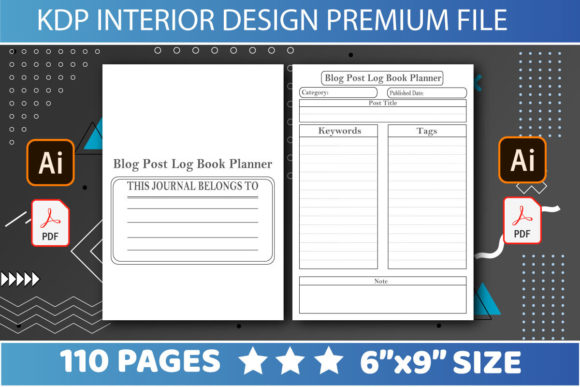
Understanding the technical attributes of the KDP Interiors Blog Post Log Book Planner helps users maximize its utility. The 6″ x 9″ trim size is the industry standard for trade paperbacks, meaning it feels professional and substantial in hand. With 110 pages, it offers approximately three to four months of active tracking space if used daily, or a full year if used for weekly high-level planning. This volume strikes a balance between comprehensive history and manageable portability.
The "No Bleed" setting is a deliberate design choice that benefits users who prefer to write near the edges or add sticky notes without worrying about text being trimmed during manufacturing. This safe margin ensures that every handwritten annotation remains legible and intact. Furthermore, the availability of PDF and AI (Adobe Illustrator) file formats addresses two distinct user needs. The PDF is ready for immediate personal printing or digital tablet use, while the AI file unlocks commercial potential for designers who wish to modify the layout, rebrand the headers, or adjust column widths to fit niche-specific metrics like ad spend or email list growth.
Customization as a Strategic Advantage
The ability to easily edit these files is perhaps the most significant feature for serious publishers. Generic planners often include irrelevant fields that waste space. With editable source files, a travel journal creator can replace standard blog metrics with location tags and photo inventory checklists. A financial educator can swap social media tracking columns for affiliate link performance and reader feedback summaries. This adaptability ensures that the tool evolves with your business rather than forcing your business into a rigid template. Entrepreneurs can even create proprietary internal tools for their teams by modifying the master file once and printing multiple copies, ensuring brand consistency across their publishing operations.
When to Implement This Planning System
Timing the adoption of a specialized log book is as important as the tool itself. This planner proves most valuable during transitional phases. If you are moving from sporadic publishing to a systematic content calendar, the structure forces discipline. During product launches, it serves as a central command post for tracking pre-order numbers, review counts, and advertising adjustments in real-time. Seasonal creators also benefit immensely; those who publish Q4 holiday books can use the planner throughout the summer to document preparation steps, supplier communications, and cover design iterations, preventing the end-of-year rush from becoming overwhelming.
Additionally, this resource is ideal for audit periods. When sales plateau, reviewing past entries in a physical log often reveals patterns that digital spreadsheets obscure. You might notice that books planned during morning sessions perform better, or that specific keyword combinations consistently yield higher organic rank. These insights emerge from the act of retrospective review that a dedicated log book facilitates.
Considerations Before Downloading or Purchasing
While highly useful, this planner is not a magic solution. Prospective users should evaluate their current workflow honestly. If you already have a robust Notion dashboard or Airtable base that you actually maintain, adding a physical layer might create redundancy rather than clarity. However, if your digital systems feel cluttered or you find yourself constantly reorganizing apps instead of working, this analog alternative offers necessary simplification.
Users should also consider their editing capabilities. While the AI files are editable, they require compatible software and basic design knowledge. If you lack access to Adobe Illustrator or similar vector editing tools, verify that the included PDF meets your needs as-is, or budget time to learn basic modifications. Finally, assess your volume. One hundred ten pages is substantial, but high-volume publishers releasing weekly titles may need to treat this as a quarterly archive rather than an annual bible. Understanding these parameters ensures the KDP Interiors Blog Post Log Book Planner integrates seamlessly into your existing ecosystem, enhancing productivity rather than adding administrative burden.
Ultimately, effective publishing is about reducing friction between idea and execution. Whether you are a solo creator building a backlist or a small business owner diversifying revenue streams, having a dedicated space to organize the chaos of content creation provides mental clarity and operational stability. This log book planner bridges the abstract world of digital algorithms with the concrete reality of daily work, helping you build a sustainable publishing practice one entry at a time.